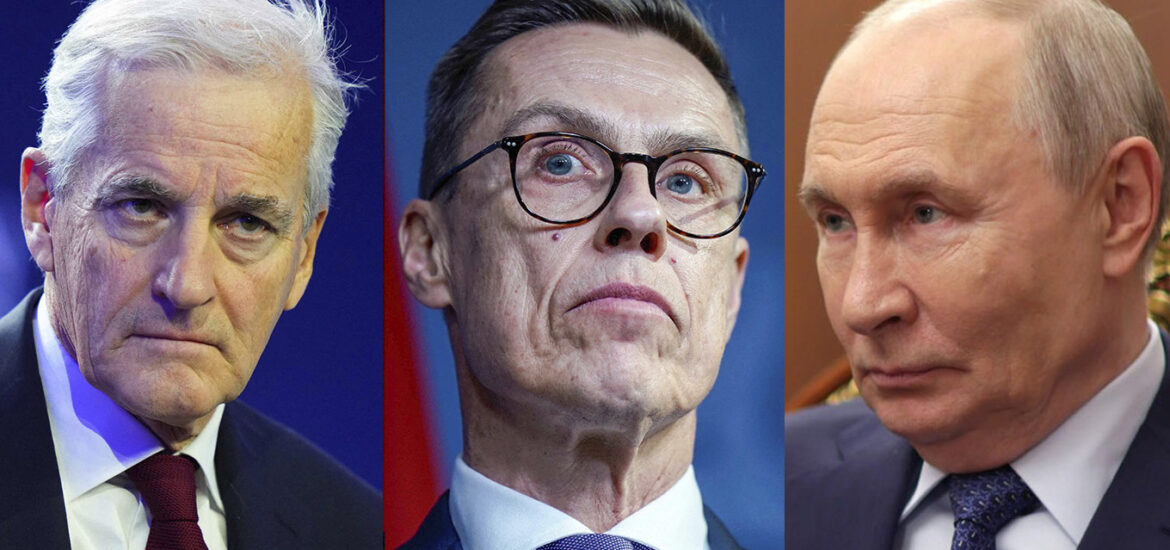
Finnish President Alexander Stubb and Norwegian Prime Minister Jonas Gahr Støre held a phone call with Russian President Vladimir Putin on Tuesday, 27 October, speaking together from Helsinki, according to the Finnish president's office. Finland said the two leaders initiated the call in consultation with Ukraine, as a follow-up to a meeting in Oslo on 20 October.
According to the Finnish statement, the aim was to pass messages directly to Putin about future negotiations to end the war, and the call was tied to upcoming meetings in Abu Dhabi. The Russian-language outlet Meduza rendered the purpose as conveying Ukraine's position on those talks. Stubb and Støre stressed that they spoke as leaders of their own countries, not on behalf of Europe as a whole.
Finland said the conversation highlighted the two countries' shared interest in stability in the Baltic Sea region and the High North. Both leaders pledged continued support for Ukraine and said the war must end and negotiations resume. Stubb described the discussion as "frank and substantive" and said ending the war requires direct talks, while Støre said they had stressed the importance of de-escalation.
Moscow's account struck a different tone. According to the Kremlin readout as relayed by media, Putin reiterated what he calls the root causes of the conflict and pointed to the confrontational policies of EU and NATO states, which he said prolong the fighting. The Kremlin framed the call as an exchange of views on settling the "Ukrainian crisis" and, according to BBC Russian, said Putin also told the leaders about a ceasefire in Oleshky (Aleshki). The Moscow Times reported that, per the readout, the three discussed security in the Baltic Sea and Northern Europe and agreed to keep in direct contact.
Russia's state news agency TASS reported that it was Putin's first phone conversation with Stubb and his first with Støre since March 2022. Media described it as Putin's first publicly announced call with European leaders backing Kyiv since his July 2025 conversation with French President Emmanuel Macron, though a Reuters source claims Macron held another, unpublicised call with Putin in July this year.
Unofficial accounts from Moscow suggested little movement. A source close to the Kremlin told Reuters that Putin said Russia would not abandon its goal of seizing all of Donbas, and that the European leaders replied a "just" peace was needed. Separately, a Kremlin-linked source told Meduza that the situation is in reality following an escalation scenario that includes intensified hybrid war with Europe, adding that Putin blames Ukraine's European allies for helping with targeting in strikes on Russia. These claims come from unnamed sources and have not been confirmed.
Ukrainian President Volodymyr Zelensky said Stubb and Støre briefed him afterwards. According to Zelensky, they told Putin that real de-escalation steps concerning Ukraine's energy and infrastructure were needed, and they discussed preparations for a trilateral meeting planned for November.
The initiative drew criticism within Europe. Danish Prime Minister Mette Frederiksen said she was "very skeptical" and that the move had not been coordinated with other allies. Støre insists allies were informed in advance.
The call follows a week of shuttle diplomacy. After meeting Zelensky, Stubb and Støre in Oslo on 20 October, US envoy Steve Witkoff travelled to St Petersburg to see Putin. The Kremlin then said Russia was ready to resume US-mediated trilateral talks with Ukraine in Abu Dhabi in the first half of November, beginning with a technical meeting.
Moscow has signalled cautious interest in the Nordic role. Kremlin spokesman Dmitry Peskov said the previous week that the Kremlin would watch whether Norway and Finland, as new participants, could contribute constructively to the peace process. Putin aide Yuri Ushakov has said peace talks would also require talking with all of Europe, and Stubb has repeatedly been mentioned as a possible EU negotiator.